Testing Business Ideas Masterclass
Learn to test business ideas by doing it. Hands-on, in two days.
You come on your own or with a small team, and you learn the tools by using them, not by hearing about them: two days of working on one shared case, from a pile of assumptions to a decision you can defend. You work alongside at most seven other practitioners, so there is room for your questions. Afterwards we apply the method to your own idea, in a personal 1:1 review.
Early-bird: €1.475 (until 19 October 2026)
Taught in Dutch. Workshop materials and the book are in English.
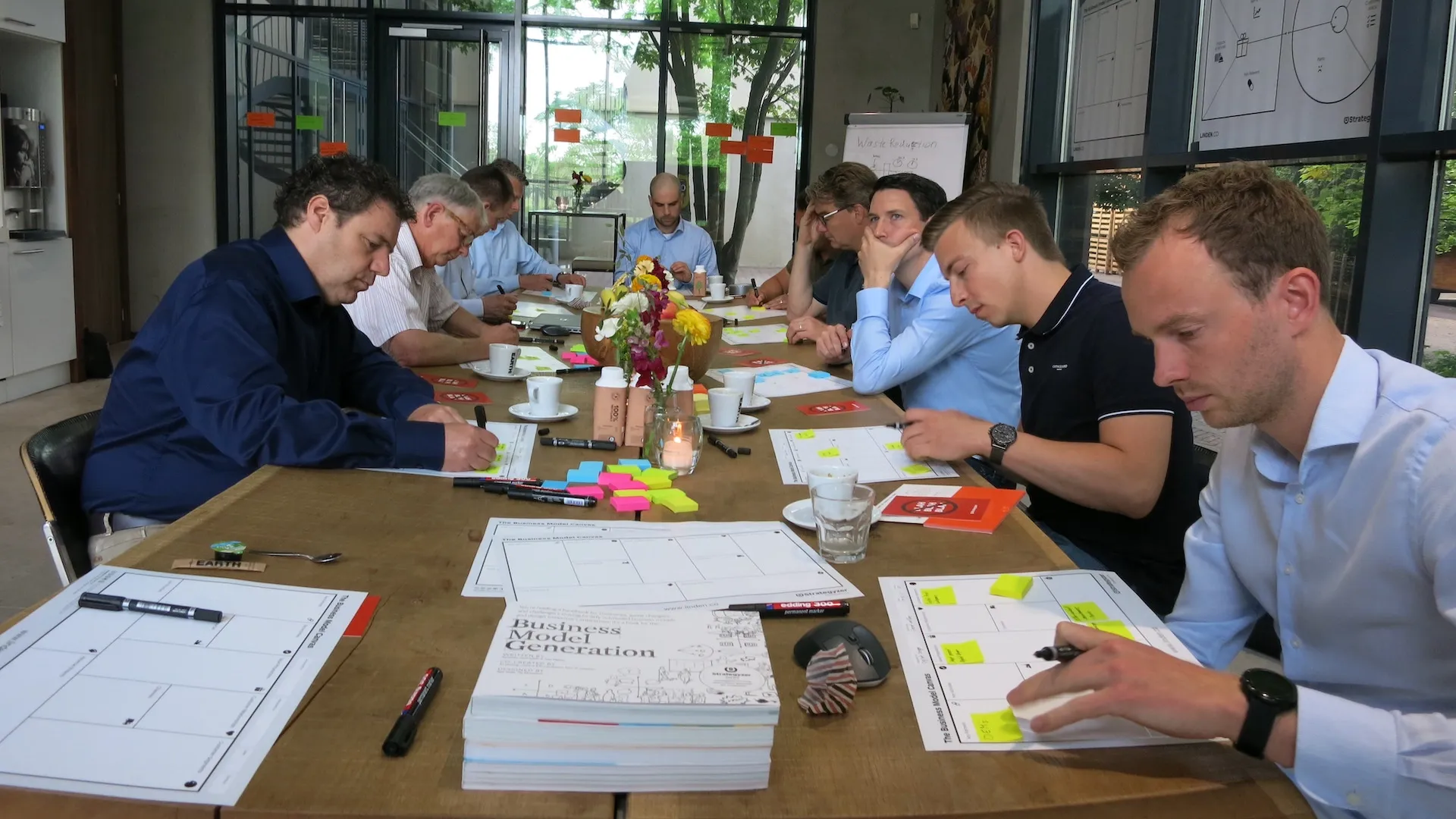
A business model is a pile of assumptions that need testing.
Most teams test what is easy to test, not what could kill the idea. They build first and ask afterwards. Or they hold ten customer conversations, hear a polite yes ten times, and call that evidence. I see this pattern regularly, also in experienced teams with plenty of budget.
This masterclass turns it around. You make the assumptions under a business model explicit, pick the ones that could sink it, design the cheapest experiment that says something about them, and learn to read the result without fooling yourself. Two days, on one shared case, from hypothesis wall to decision.
Everyone works on the same case. Nobody has to expose their own idea to a room of strangers, and the group can run the complete loop in two days, including reading experiment results that take weeks in real life. Your own idea comes next: you build your own assumptions map and in the 1:1 review we choose the first experiment together.
The 5 tools you learn to use
Five tools that turn testing into a method: each step in the masterclass introduces one tool, and each tool builds on what the previous one exposed.
- 01
Assumptions map
Every business model rests on assumptions: about customers, about delivery, about money. This map forces them out of heads and onto the wall, and shows which ones can sink the idea. That is where testing starts, and where most teams have never looked.
- 02
Experiment library
Choose from 44 experiments in two families. Discovery: cheap and fast, weaker evidence, to find direction. Validation: costlier, stronger evidence, to confirm. You learn to pick by type of hypothesis, level of uncertainty and the time until your next decision.
- 03
Test card and learning card
Fix the experiment before you run it: hypothesis, test, metric and the threshold at which the answer is no. Capture afterwards what you saw, what you learned and what you decide. Experiments become comparable and a decision becomes unavoidable.
- 04
Customer interviews
The experiment you will run most often, and the easiest one to fool yourself with. You learn to ask about behaviour instead of intentions, to hear the difference between a polite yes and evidence, and to interview in B2B, where your contact is rarely the whole customer.
- 05
Innovation project scorecard
One scorecard, three questions: does it fit where the company wants to go, how much risk have you actually reduced with evidence, and is the opportunity worth it. Risk reduction weighs heaviest, so a good story without real experiments still doesn't score.
What you will do in two days
Two full days, 09:30 to 16:30. Every block introduces one tool and applies it to the case straight away.
Day 1: Map Assumptions and Design Experiments
| Time | Topic |
|---|---|
| 09:30 | Intro and case briefing: the investment decision on the table and the testing question behind it |
| 10:00 | Surfacing hypotheses: what has to be true in the business model, split into desirability, feasibility and viability |
| 11:15 | Break |
| 11:30 | Assumptions map: prioritise by importance and evidence, pick the business killers |
| 12:15 | Lunch |
| 13:15 | Experiment library: discovery versus validation, the right experiment for the right assumption |
| 14:30 | Break |
| 14:45 | Designing the first experiment: test card with hypothesis, metric and fail criterion set in advance |
| 15:45 | Wrap-up day 1: what is on the wall, what happens tomorrow |
Day 2: Gather Evidence and Decide
| Time | Topic |
|---|---|
| 09:30 | Recap day 1 and the case's experiment results on the table |
| 10:00 | Customer interviews that produce evidence: asking about behaviour instead of intentions, the pitfalls, interviewing in B2B |
| 11:15 | Break |
| 11:30 | Experiment sequences: from weak to strong evidence, sequences for services, physical products and long buying cycles |
| 12:30 | Lunch |
| 13:30 | Reading evidence: filling in learning cards, scoring risk reduction on the innovation project scorecard, spotting confirmation bias |
| 14:30 | Break |
| 14:45 | Deciding: persevere, pivot or kill. And the testing rhythm in your own organisation |
| 15:30 | Wrap-up: toolkit summary, assignment for your own case, introduction to the 1:1 review |
Join on your own, or bring a team.
You can join individually. Your ticket covers the two full masterclass days (09:30 to 16:30), workshop materials with the assumptions map, test cards, learning cards and the innovation project scorecard, lunch and coffee on both days, and the book Testing Business Ideas by Strategyzer. As a bonus you get a personal 1:1 online review (1 hour) of your own assumptions map and first experiment, within six weeks after the masterclass.
You can also join as a team of four. Everyone gets everything above, and as a team bonus you get a half-day team workshop (3 hours) at 't Patronaat in Helmond as follow-up, on your own idea or business model.
You learn the method on the case. You get the result on your own idea.
At the end of day 2 you get an assignment: build an assumptions map for your own idea or business model and one test card for the assumption carrying the most risk. In the 1:1 review we look at it together. Which assumptions really sit top right, which evidence you already have without knowing it, and which experiment gives you a decision-grade answer fastest. No generic advice, but a first experiment you can start the following week.
Choose your ticket
- 2 full days of learning
- Workshop materials, the book Testing Business Ideas, lunch and coffee
- Bonus: 1:1 review of your own assumptions map
- 2 full days of learning
- Workshop materials, the book Testing Business Ideas, lunch and coffee
- Bonus: 1:1 review of your own assumptions map
- Everything above, for four people
- Bonus: half-day team workshop in Helmond
Three things that change when you learn to test.
The discussion shifts. Before the masterclass, a meeting is about who is right. Afterwards it is about what evidence is on the table and what it is worth. That sounds small, but it takes the hierarchy out of the conversation: the director's assumption hangs next to the product manager's, and the assumptions map does not ask who wrote it.
Building stops earlier. In 100+ sessions with teams testing business ideas I see the same moment come back: the realisation that the first experiment is a thirty-minute interview, not a three-month prototype. Teams that have seen that once do not unsee it.
And stopping becomes discussable. A fail criterion written on the test card beforehand turns "we are stopping this" into an outcome instead of a defeat. That is the discipline missing from most portfolios, and on day 2 of this masterclass it is simply something you learn.
Trained at the source: the only official Strategyzer coach in the Netherlands.
I am an official Strategyzer coach, one of 19 worldwide, trained as a facilitator by Alex Osterwalder and Yves Pigneur themselves, and since 2017 I have done client work on behalf of Strategyzer. This masterclass is built on the Strategyzer books, with Testing Business Ideas at its core, and on my own experience: 25+ years of business experience and 100+ sessions with teams testing business ideas. The books are included; every participant gets them.
You are not learning an interpretation. You are learning the methodology from the source. More about my background
't Patronaat, Helmond
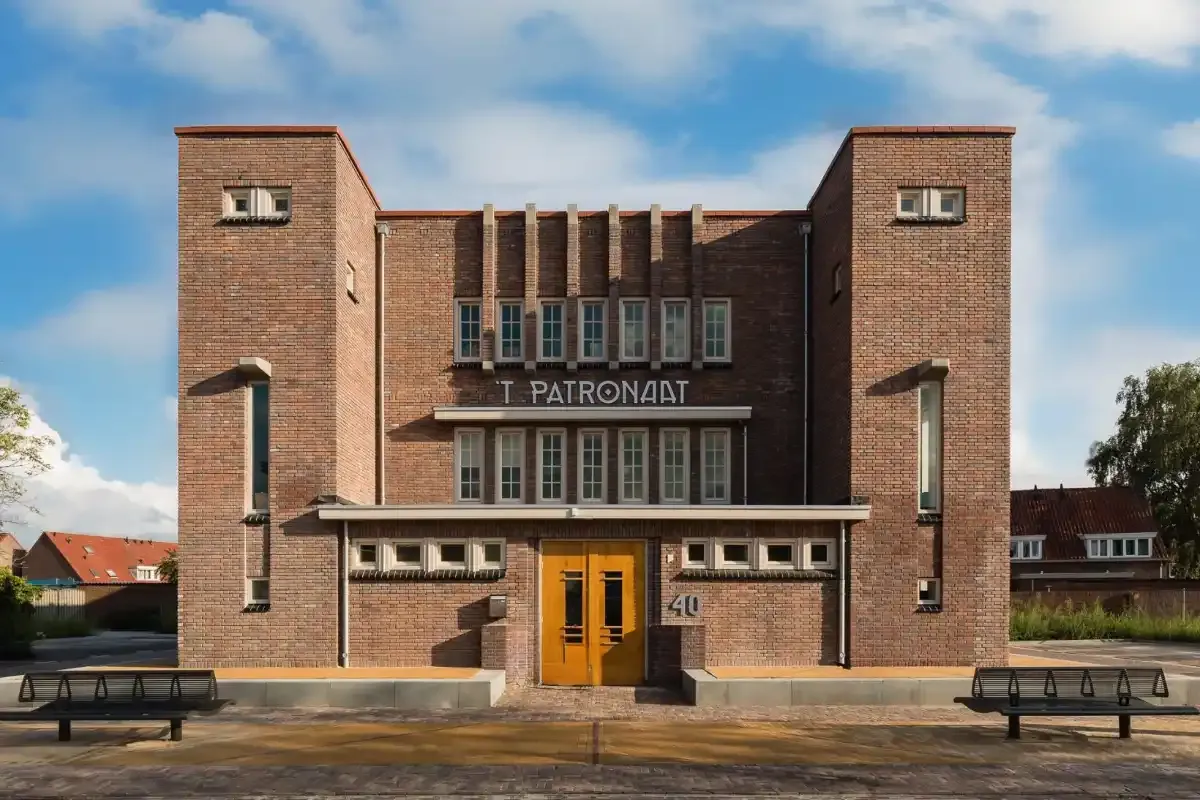
't Patronaat is a restored national monument in Helmond: once a parish hall, a school and a community centre, now home to creative entrepreneurs. One large room, high ceilings and enough wall for a hypothesis wall, an assumptions map and an experiment board side by side. That matters more than it sounds: the tools work on walls, not on tables.
Reachable by car (free parking two minutes' walk away) and by public transport (10 minutes' walk from Helmond station). Coffee, lunch and afternoon breaks are included on both days.
Frequently asked questions
Do I need to have attended the Business Model Innovation Masterclass first?
No. If you know the Business Model Canvas and the Value Proposition Canvas a little, you can join straight away. On day 1 you get a short recap of the case's canvases. The Business Model Innovation Masterclass (14 and 15 October 2026) is the design phase: there you design the model you learn to test here. Together they form the complete path, but each stands on its own.
Do I work on my own idea?
During the two days you work on a shared case. That is deliberate: real experiments take weeks, and with a shared case the group can run the complete loop in two days, including reading results. Your own idea comes next: you build your own assumptions map and in the 1:1 review we choose the first experiment together. Want to work on your own idea with your own team right away? That is an in-company workshop. See the workshops
Do you use AI in testing?
Where it helps, yes. For desk research into existing evidence and for synthesising interview notes it saves hours. But the method and the judgement stay with the group: which assumption matters most, what evidence is worth and what you decide, you do not leave to a model.
How big is the group?
Maximum 8 participants. That means personal guidance and room for your specific questions.
What if I want to join with a team?
There is a team ticket for 4 people. As a bonus the team gets a half-day workshop at 't Patronaat in Helmond as follow-up: you bring your own idea or business model, and together we build the assumptions map and choose the first experiment sequence.
Can my employer reimburse this masterclass?
Often, yes. Many companies have a training or innovation budget this masterclass fits in. On request I will send you a sample justification you can use internally: ask for it via the form below.
What if I unexpectedly cannot attend?
Up to 30 days before the masterclass (12 October 2026) you can cancel free of charge. After that, a colleague can take your place.
What language is the masterclass taught in?
Dutch. The workshop materials and the book are in English.
Is there a follow-up to this masterclass?
Yes. After the masterclass you can apply the method yourself. If you want to do it with your own team, there is the in-company workshop. If you want to actually run the experiments with guidance, there is the 12 to 24 week sprint. See the services
Will there be another edition?
Yes, new editions open a few times a year. If this edition is full or the dates do not work, ask your question below and I will let you know when the next date opens.
Have a different question?
Fill in your details and ask your question. I read and answer every message myself, and get back to you as soon as I can.
Not sure this is the right fit?
That is a fair question before committing two full days. If you want to talk it through first, request a free Strategy Call: I read every request myself and reply with whether I think this masterclass is the right move for you.